
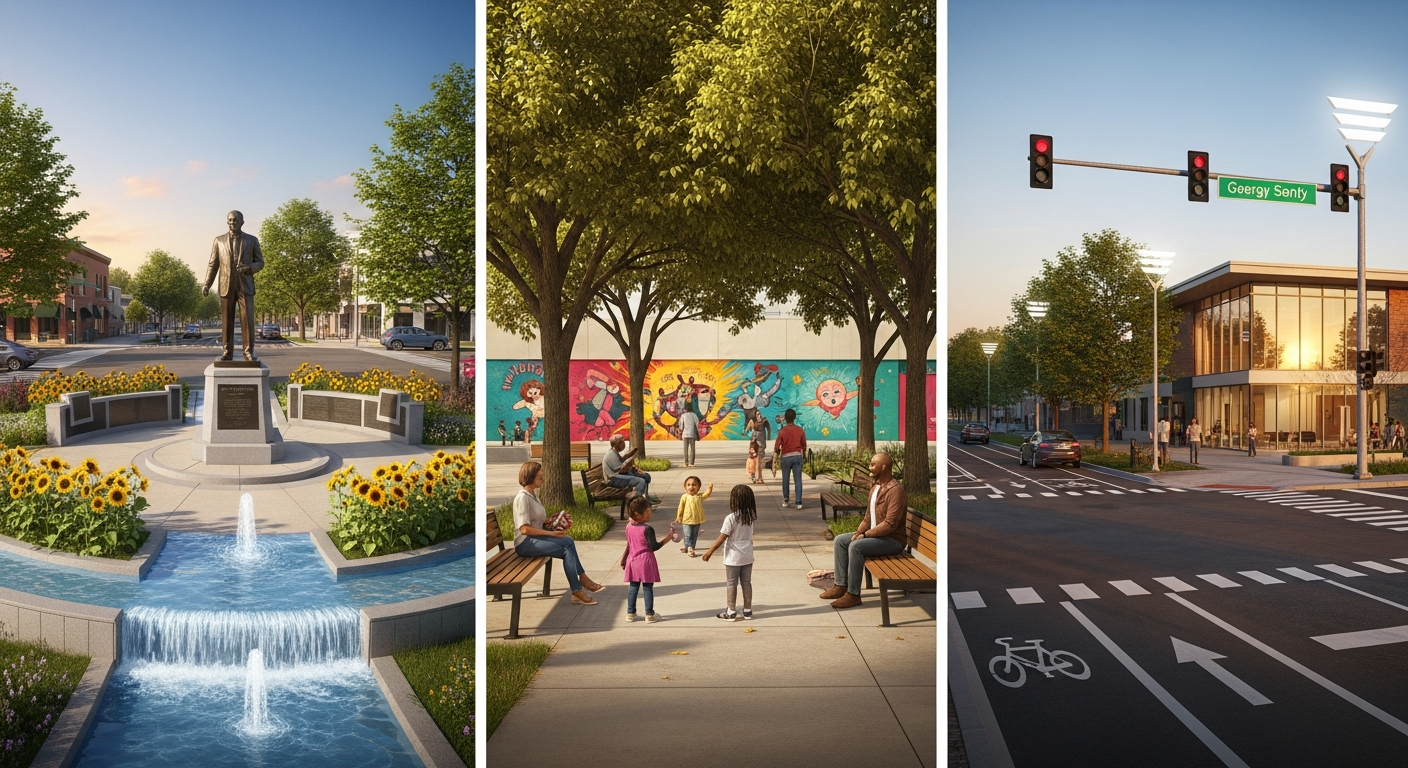
After years of political back-and-forth, the Minneapolis City Council has finally approved a plan for George Floyd Square that balances practical needs with memorial preservation. The 9-4 vote in favor of the “flexible-open” street concept represents more than just urban planning—it symbolizes Minneapolis’ struggle to honor tragedy while allowing a community to function and heal.
The approval comes after a lengthy political tug-of-war between Mayor Jacob Frey and the City Council, with multiple vetoes and overrides that delayed meaningful progress. This political theater has done a disservice to both Floyd’s memory and the community that deserves thoughtful redevelopment.
The Flexible-Open Concept Strikes the Necessary Balance
The approved plan offers the best compromise between competing needs. Unlike the rejected pedestrian mall concept, the flexible-open design acknowledges the practical reality that functioning neighborhoods require accessible transportation while creating space for reflection and remembrance. The restoration of Metro Transit service is particularly crucial for residents who rely on public transportation for daily necessities.
Similar approaches have worked effectively in other memorial sites around the country. In Boston, the area surrounding the Marathon bombing memorial maintains normal traffic flow but can be closed for commemorative events. This dual-purpose design has allowed the area to both honor victims and remain a vibrant part of the city’s landscape.
The pedestrian mall concept, while well-intentioned, would have potentially isolated the area and created logistical challenges for residents. Urban planning research consistently shows that completely closing streets to vehicles can sometimes lead to unintended consequences, including reduced accessibility for the elderly and disabled, and potential economic impacts on local businesses that depend on drive-by traffic.
Political Posturing Has Delayed Meaningful Progress
The path to this decision reveals troubling aspects of Minneapolis governance. The series of vetoes and overrides between the mayor and council demonstrates how political positioning can impede practical solutions. Mayor Frey’s characterization of the council’s earlier decision as a “colossal waste of time and money” may have been blunt, but it highlighted a legitimate concern about administrative efficiency.
This pattern of governance-by-veto has become increasingly common in polarized political environments. Similar dynamics played out in Portland during its redesign of public spaces following 2020 protests, where political battles delayed implementation of community-driven solutions for over a year.
The people of Minneapolis deserved a more streamlined decision-making process focused on community needs rather than political wins. The four years since Floyd’s murder should have been enough time to develop and implement a cohesive plan without the political theater that has characterized this process.
Infrastructure Needs and Community Healing Must Coexist
What’s often overlooked in discussions about George Floyd Square is that infrastructure improvements at 38th and Chicago were needed even before 2020. The city’s plan to replace aging infrastructure and remove lead service lines addresses critical public health and safety concerns that transcend the memorial aspect.
The Washington Post’s analysis of urban memorial sites found that the most successful ones integrate practical infrastructure improvements with commemorative elements. The Vietnam Veterans Memorial in Washington D.C., for example, incorporated necessary drainage and pathway improvements while creating a powerful space for reflection.
By coordinating these necessary upgrades with memorial and redevelopment plans for the People’s Way site, Minneapolis has an opportunity to demonstrate how infrastructure investment can complement, rather than compete with, spaces of remembrance.
Economic Revitalization Must Center Black Businesses
Councilor Andrea Jenkins’ statement that the plan creates “opportunities for Black-owned businesses to thrive” points to a crucial aspect of meaningful redevelopment. True commemoration of George Floyd must include economic justice for the community most affected by systemic racism.
The Montgomery Bus Boycott Memorial in Alabama offers an instructive example. Beyond physical monuments, the area includes incubator spaces for Black entrepreneurs and specific zoning considerations to prevent gentrification from displacing existing community members.
Minneapolis must ensure that redevelopment includes concrete economic opportunities for Black residents and protection against displacement. Without these elements, physical changes to the square risk becoming hollow symbols rather than meaningful steps toward justice.
Alternative Viewpoints: The Case for the Pedestrian Mall
Supporters of the pedestrian mall concept raised legitimate concerns that deserve acknowledgment. The desire for a more radical reimagining of public space reflects a belief that extraordinary events call for extraordinary responses. The murder of George Floyd wasn’t an ordinary tragedy, and some argue the response shouldn’t be an ordinary redesign.
Additionally, the pedestrian mall concept would have created more green space in an area where environmental justice issues have historically been overlooked. Urban neighborhoods with predominantly Black residents typically have less access to green space than predominantly white neighborhoods, and the pedestrian mall would have addressed this disparity more directly.
However, these benefits must be weighed against practical concerns about accessibility, transit service, and the wishes of residents who need functional infrastructure. The flexible-open concept can still incorporate significant green space and memorial elements while maintaining essential services.
Moving Forward with Intentionality
Construction isn’t slated to begin until 2026, giving Minneapolis time to refine plans with continued community input. This timeline should not be viewed as another delay but as an opportunity to get the details right through thoughtful engagement.
The city should establish transparent metrics for measuring success beyond physical construction. These should include economic indicators for Black-owned businesses in the area, community satisfaction with memorial elements, and practical measures like transit ridership and pedestrian safety.
The redevelopment of George Floyd Square represents more than urban planning—it’s a physical manifestation of how Minneapolis chooses to remember tragedy and pursue justice. The flexible-open concept provides the framework, but the details of implementation will determine whether this space truly honors George Floyd’s legacy while serving the community’s needs.