
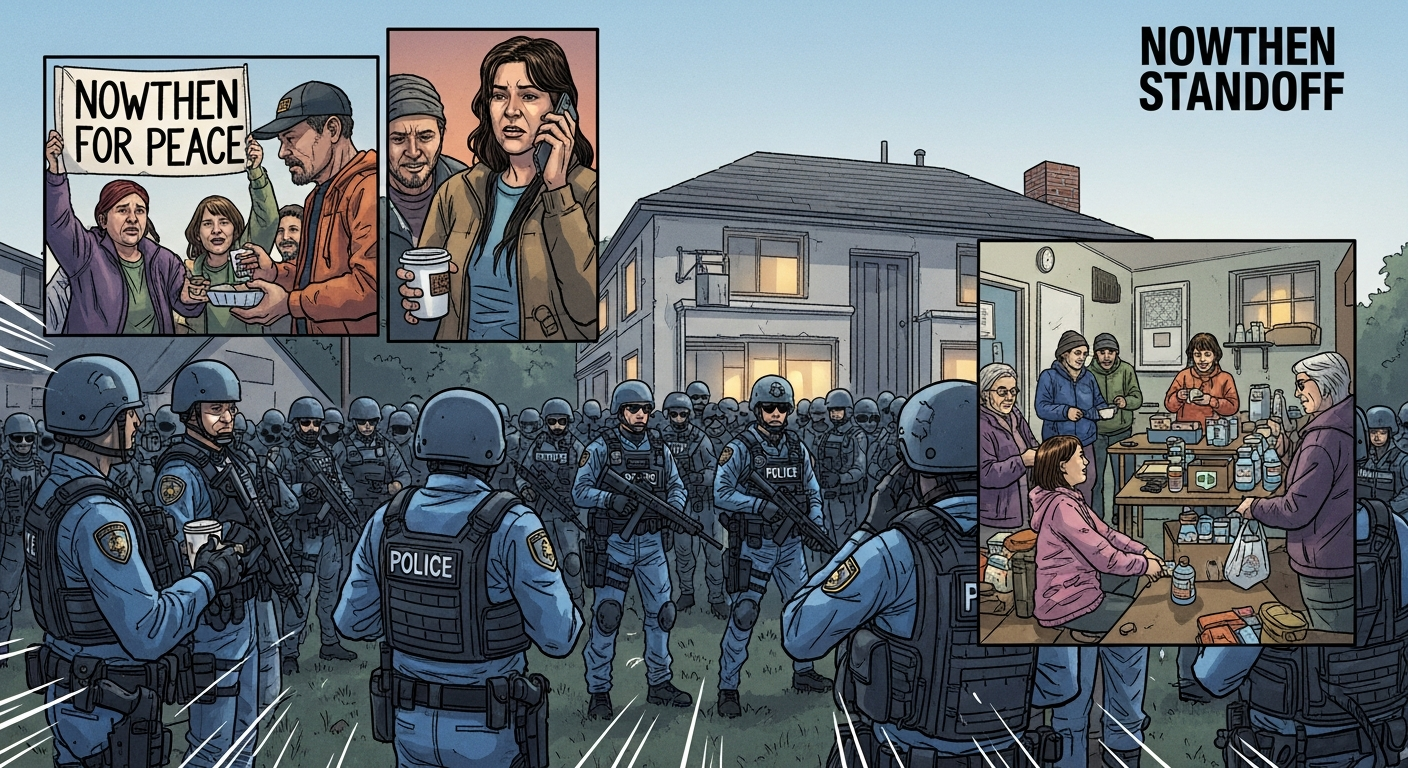
The 17-hour standoff in Nowthen, Minnesota, ending with arson and a gas-masked suspect’s surrender, represents far more than just another crime story. It exemplifies a systemic failure in how our society handles individuals in crisis who have outstanding warrants. While Clinten Michael Larson must face accountability for his dangerous actions, this incident highlights the urgent need for more effective crisis intervention protocols that could prevent such dangerous escalations.
Our Current Approach to Warrant Service Creates Unnecessary Danger
The traditional approach to serving warrants on barricaded individuals—surrounding a residence for hours or days while deploying increasingly aggressive tactics—consistently produces high-risk outcomes for everyone involved. In this case, the standoff lasted nearly 17 hours, involved destroyed law enforcement equipment, gunfire, chemical irritants, and ultimately a structure fire. This pattern repeats across the country with alarming regularity.
Consider the 2021 case in Elizabeth City, North Carolina, where deputies attempting to serve warrants on Andrew Brown Jr. resulted in his death by gunfire. Or the 2020 Louisville, Kentucky tragedy involving Breonna Taylor, killed during a warrant execution. While the Nowthen standoff ended without loss of human life, the pattern of escalation remains troublingly similar.
The financial costs alone should prompt reconsideration of these approaches. A single extended standoff can cost taxpayers hundreds of thousands of dollars in personnel overtime, specialized equipment deployment, property damage, and subsequent legal proceedings. The Nowthen incident involved multiple law enforcement agencies, drones, robots, chemical agents, and eventually fire suppression resources—all tremendously expensive.
Mental Health Crisis Intervention Must Be Integrated into Warrant Service
The behavior described in the Nowthen standoff—barricading, threats, property destruction, and ultimately self-endangering actions—strongly suggests a person in psychological crisis. Yet our standard response protocol centers on force escalation rather than de-escalation and mental health intervention.
Programs like CAHOOTS (Crisis Assistance Helping Out On The Streets) in Eugene, Oregon demonstrate effective alternatives. This program, which sends mental health professionals instead of police to certain crisis calls, has saved the city an estimated $8.5 million annually while reducing violent confrontations. Similarly, Denver’s STAR (Support Team Assisted Response) program reported handling over 1,300 calls in its first year without once needing to call for police backup due to safety concerns.
Had trained crisis negotiators with mental health expertise been the primary responders in Nowthen—rather than tactical teams—the situation might have been resolved without property destruction or the risk of serious injury or death. This approach would require fundamental changes to how warrants are served on individuals with known mental health issues or histories of crisis behavior.
Technology and Timing Offer Untapped Alternatives
The Nowthen standoff also reveals our failure to utilize strategic timing and technology to reduce confrontation risks. Law enforcement agencies often serve high-risk warrants at times and locations that maximize confrontation rather than safety.
The Montgomery County, Maryland Police Department has pioneered an alternative approach, using data analysis to identify low-risk opportunities to contact wanted individuals—such as during routine traffic stops or at public locations—rather than forcing confrontations at residences. Their strategic warrant service program has reduced violent incidents by over 60% while maintaining arrest effectiveness.
Similarly, departments using advanced notification systems that offer alternatives to immediate arrest have seen increased compliance. Fugitive Safe Surrender programs, which provide opportunities for individuals with outstanding warrants to turn themselves in with certain procedural assurances, have processed thousands of cases without violent incidents.
Alternative Viewpoints: The Public Safety Argument
Some will argue that aggressive tactical responses to barricaded subjects are necessary to protect public safety, particularly when the subject is armed and making threats. This perspective holds that law enforcement must maintain the authority to use escalating force when faced with non-compliance, especially with individuals who have demonstrated unwillingness to surrender peacefully.
This argument has merit when immediate public danger exists. However, in cases like the Nowthen standoff, where the subject was contained within a single structure with no hostages, the public safety calculation changes significantly. The greatest dangers often emerge from the escalation itself—the deployment of chemical agents, the psychological pressure of tactical teams, and the heightened emotional state that can lead to desperate acts like arson.
Others might contend that incorporating mental health professionals into high-risk warrant service puts those professionals at unacceptable risk. Yet co-responder models across the country have demonstrated that proper training, clear protocols about when mental health professionals engage, and thoughtful staging can mitigate these risks while improving outcomes.
Toward a More Effective Approach
The Nowthen standoff demonstrates the need for a fundamental rethinking of how we handle warrant service for individuals who may be in crisis. This would include:
- Mandatory pre-service assessment of mental health factors and crisis potential before tactical deployment
- Integration of mental health professionals into warrant service planning and execution
- Development of specialized units combining tactical expertise with crisis negotiation skills
- Implementation of technological solutions that reduce the need for high-risk confrontations
- Creation of alternative surrender programs that provide pathways to compliance without confrontation
The financial, human, and community costs of our current approach are simply too high to maintain the status quo. While Larson’s alleged actions—threatening officers, firing at equipment, and apparently setting fire to the residence—deserve accountability through our justice system, we must simultaneously acknowledge that our current approach to such situations often creates the very dangers it seeks to manage.
Until we develop more sophisticated, nuanced approaches to serving warrants on individuals in crisis, we will continue to see dangerous, expensive, and traumatic standoffs that put everyone at risk—suspects, officers, and communities alike. The Nowthen incident isn’t just a crime story; it’s a policy failure that demands correction before the next standoff ends with even more tragic consequences.