
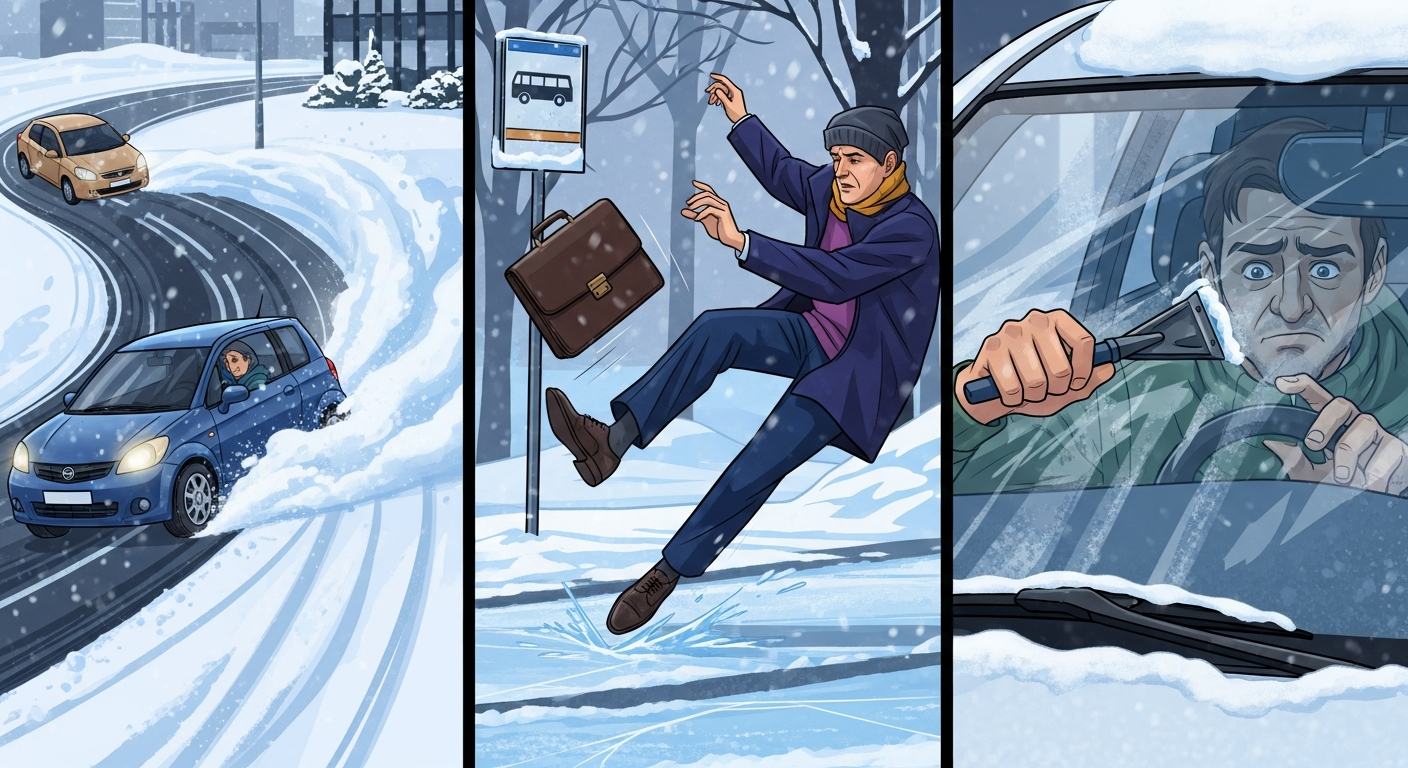
Monday’s treacherous commute across Minnesota wasn’t just another winter inconvenience—it was a glaring example of our failing approach to winter infrastructure management. As public works officials warn about another potentially dangerous Tuesday morning commute due to refreezing, we must confront the uncomfortable truth: our current reactive system prioritizes emergency response over strategic prevention, leaving commuters perpetually vulnerable to weather-related dangers.
The pattern is predictable. Snow falls, roads become hazardous, accidents multiply, and officials advise caution while scrambling to address conditions. What’s missing is the fundamental shift toward preventative infrastructure that many comparable winter-climate regions have successfully implemented. The question isn’t whether we can afford to change our approach—it’s whether we can afford not to.
Our Current Approach Normalizes Preventable Danger
The language used by transportation officials reveals the problem. When Minneapolis Director of Transportation Maintenance and Repair Joe Paumen suggests that ‘it’s important for folks to slow down,’ he places the burden of safety primarily on drivers rather than on infrastructure systems. While driver caution is certainly necessary, this perspective normalizes dangerous conditions as inevitable rather than addressable through systemic improvements.
Consider the economic impact: The American Transportation Research Institute estimates that weather-related delays cost the trucking industry alone over $8.5 billion annually. In Minnesota, these costs are disproportionately high due to our winter severity. When Saint Louis Park Public Works Supervisor Mike Okey notes the ‘ice pack underneath the snow just from so much traffic being on it for so long,’ he’s describing a preventable condition that better road design and proactive maintenance could mitigate.
The reassurance that ‘we aren’t expecting to see another major snow event any time soon’ reflects a troubling satisfaction with merely catching up between storms rather than building resilience against them. This reactive mindset costs Minnesotans not just in safety but in productivity and economic opportunity.
Infrastructure Solutions Exist But Remain Underutilized
The technology and infrastructure solutions for safer winter roads exist and have been successfully implemented elsewhere. Sweden’s Vision Zero approach has dramatically reduced winter traffic fatalities through heated roadways in critical areas, advanced road surface materials, and strategic snow fence placement. These investments pay for themselves through reduced accident costs, lower maintenance expenses, and fewer economic disruptions.
In Quebec, regulations requiring winter tires have reduced winter accident rates by over 17% since implementation. Meanwhile, Minnesota continues to rely primarily on driver discretion despite our comparable climate. The Minnesota Department of Transportation’s own studies show that strategic snow fence installation could prevent up to 40% of winter visibility-related accidents in rural areas, yet implementation remains limited.
Automated road treatment systems that deploy salt or brine solutions based on real-time road temperature sensors have shown tremendous success in parts of Europe and even in neighboring Wisconsin. These systems prevent ice formation before it becomes dangerous rather than treating it after conditions deteriorate.
The Economic Case for Winter Infrastructure Investment
The fiscal conservatism that often prevents investment in better winter infrastructure ignores the massive hidden costs of our current approach. A single fatal accident costs society approximately $11 million according to Federal Highway Administration estimates. Non-fatal accidents add billions more in healthcare costs, lost productivity, and property damage.
When officials like Paumen express relief that snow events have ‘been spaced out enough that we have been able to perform our entire operation before the next one starts,’ they’re setting the bar too low. The goal shouldn’t be merely completing basic snow removal between storms but creating infrastructure resilient enough that storms don’t create crisis conditions in the first place.
The American Society of Civil Engineers gives Minnesota’s infrastructure a C grade, noting particular vulnerabilities in our transportation systems. This mediocrity costs the average Minnesota household approximately $1,400 annually in car repairs, lost time, and other expenses directly attributable to poor infrastructure—a hidden tax that disproportionately affects lower-income residents who often have longer commutes.
Alternative Viewpoints: The Case for Caution
Advocates for the status quo argue that Minnesota’s weather extremes make more advanced infrastructure solutions impractical or prohibitively expensive. They point to the state’s budget constraints and suggest that drivers should simply adapt to winter conditions as generations before them have done.
This perspective has merit regarding certain high-tech solutions. Heated roadways, for instance, would be financially impractical to implement across the entire road network. However, this all-or-nothing thinking prevents targeted implementation in high-risk areas like bridges, steep hills, and major intersections where the return on investment would be substantial.
Others suggest that climate change may eventually reduce winter severity, making major investments unwise. This view dangerously ignores climate science showing that warming actually increases precipitation volatility and can lead to more extreme winter events even as average temperatures rise. The February 2021 Texas freeze demonstrated how infrastructure unpreparedness for even occasional winter events can lead to catastrophic failures.
Moving Beyond Acceptance Toward Action
Minnesota’s winter transportation challenges aren’t natural disasters—they’re policy failures. When we accept that residential streets will remain dangerous for days after snowfall, we’re making a choice to prioritize short-term budget considerations over public safety and economic efficiency.
The solution requires a paradigm shift from reactive snow management to proactive winter resilience. This means investing in road surface technologies that resist ice formation, implementing targeted heating in high-risk areas, requiring appropriate winter tires during certain months, and deploying automated treatment systems that prevent rather than respond to dangerous conditions.
Most importantly, it requires abandoning the notion that winter-related accidents are simply the cost of living in Minnesota. Other regions with similar or worse winter conditions have dramatically improved safety through strategic investments. Our failure to do the same isn’t a weather problem—it’s a leadership problem.