
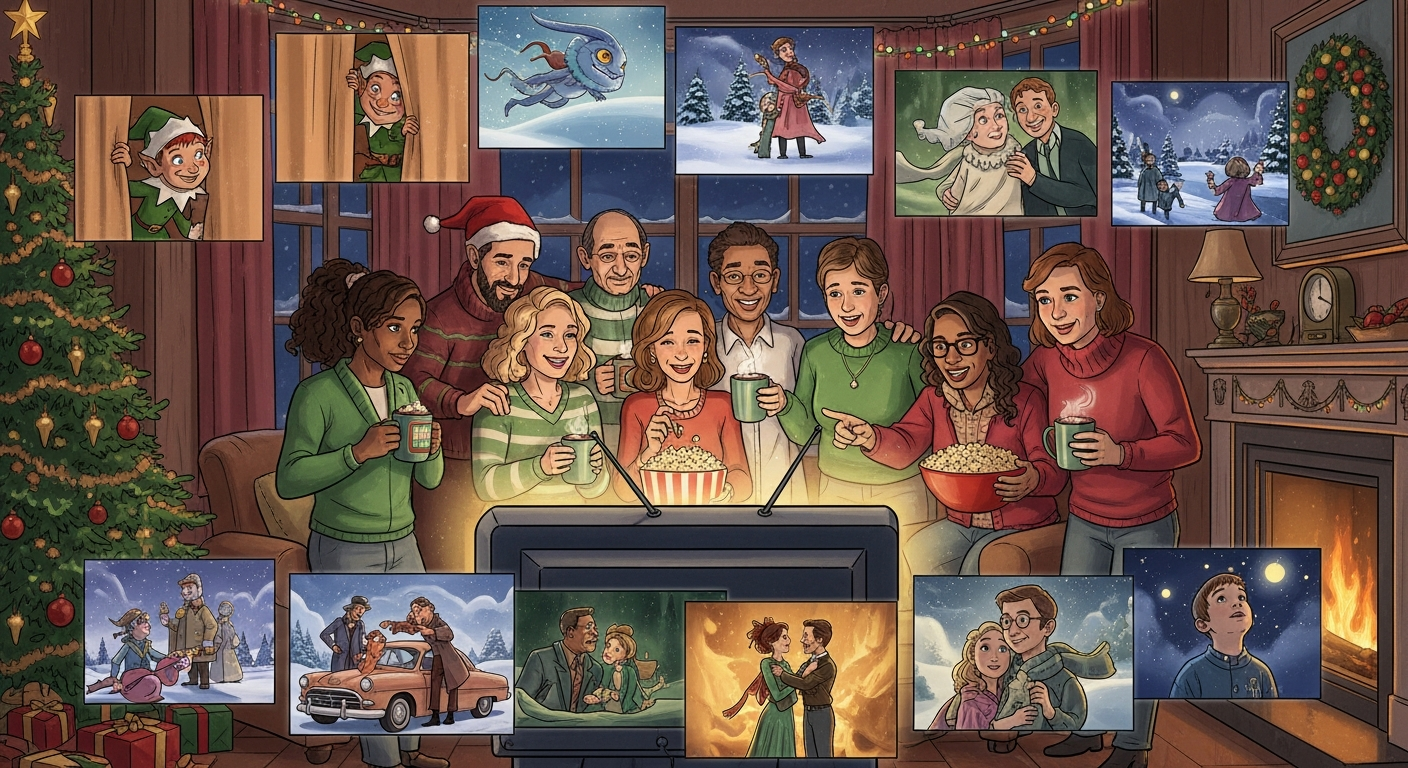
The KARE 11 staff’s eclectic holiday movie selections expose a fascinating truth: our collective definition of ‘holiday film’ has expanded far beyond traditional Christmas narratives. This shift isn’t merely about entertainment preferences—it represents a profound cultural evolution in how we process seasonal emotions and family dynamics.
What’s particularly striking about their list is the prevalence of films that confront family dysfunction, existential dread, and complex emotions—precisely what many experience during the holidays despite the pressure to maintain a facade of perfect joy. From the alcoholic anti-hero in ‘Eight Crazy Nights’ to the family estrangement in ‘Home for the Holidays,’ these selections validate the messy reality of seasonal gatherings.
The Rise of Anti-Holiday Holiday Films
The inclusion of films like ‘Bad Santa,’ ‘Krampus,’ and ‘Scrooged’ reveals our cultural need for catharsis through subversion. These aren’t simply irreverent alternatives—they’re necessary counterbalances to the saccharine holiday narratives that can make those struggling during the season feel even more isolated.
Consider how ‘Bad Santa’ deliberately dismantles every trope of the kindly Christmas figure, yet ultimately delivers a redemption story more authentic than many traditional offerings. When Universal Pictures rejected the script, calling it the ‘foulest, disgusting, misogynistic, anti-Christmas, anti-children thing we could imagine,’ they failed to recognize that many viewers connect more deeply with flawed characters who find redemption than with characters who never needed it.
The popularity of these subversive films coincides with rising holiday stress and depression rates. A 2015 NAMI study found that 64% of people with mental illness report holidays make their conditions worse. These films provide emotional release valves by acknowledging the season’s darker undercurrents.
The John Hughes Holiday Universe
The prevalence of John Hughes films on this list (five mentions!) deserves special attention. Hughes mastered the art of blending holiday warmth with authentic family chaos. ‘Uncle Buck,’ ‘Planes, Trains and Automobiles,’ and the ‘Home Alone’ franchise all feature dysfunctional family dynamics that resolve not through Christmas magic, but through messy human connection.
Hughes created a distinctive holiday cinematic language that resonates because it acknowledges familial imperfection while still delivering emotional satisfaction. His films occupy a middle ground between traditional holiday sentimentality and cynical subversion. They validate our complicated family experiences while still offering hope for reconciliation—a balance that explains their enduring appeal across generations.
The Internationalization of Holiday Cinema
The inclusion of ‘Un Conte De Noël’ (A Christmas Tale) and ‘Klaus’ signals another important shift: holiday cinema is becoming more international and culturally diverse. The French film ‘A Christmas Tale’ approaches family dysfunction with a distinctly European sensibility, while Netflix’s Spanish-produced ‘Klaus’ reimagines Santa’s origin story through stunning animation and cultural hybridization.
This internationalization matters because it broadens our emotional vocabulary around the holidays. The American Christmas film tradition has historically centered on specific cultural touchstones, but as global streaming platforms democratize content distribution, our collective holiday canon diversifies. The French approach to family drama in ‘A Christmas Tale’—more philosophical and less resolution-focused than American counterparts—offers viewers new frameworks for processing their own family dynamics.
Animation’s Growing Emotional Sophistication
The animated selections on this list—’Klaus,’ ‘The Nightmare Before Christmas,’ and ‘The Polar Express’—demonstrate animation’s unique capacity to explore holiday themes with visual and emotional complexity. These aren’t merely ‘kids’ movies’ but sophisticated explorations of belief, tradition, and emotional growth.
‘The Nightmare Before Christmas’ remains particularly significant for blurring holiday boundaries and questioning rigid seasonal categorizations. Its ongoing debate about whether it’s a Halloween or Christmas movie (reflected in the staff disagreement mentioned in the article) speaks to our evolving understanding of holiday traditions as fluid rather than fixed.
Alternative Viewpoints: The Case for Tradition
Traditionalists might argue that expanding the definition of ‘holiday film’ dilutes the special cultural significance of Christmas classics. There’s legitimate concern that cynical or subversive takes might undermine the genuine comfort many derive from traditional holiday narratives. The sense of continuity provided by watching the same beloved classics year after year creates important family rituals and intergenerational bonds.
However, this perspective overlooks how unconventional holiday films often reinforce rather than reject core holiday values. Films like ‘Scrooged’ and ‘Bad Santa’ ultimately affirm generosity and connection—they simply take darker, more circuitous routes to these conclusions. Rather than diluting holiday traditions, these alternative narratives make them accessible to those who might otherwise feel alienated by conventional holiday sentimentality.
The Streaming Era’s Impact on Holiday Film Diversity
The KARE 11 list reflects streaming platforms’ massive influence on holiday viewing habits. Netflix, Apple TV+, and other services have invested heavily in holiday content, creating new classics like ‘Klaus’ while also preserving access to older cult favorites. This democratization of distribution has allowed more diverse holiday narratives to find audiences.
The streaming era has also normalized genre-blending in holiday entertainment. Horror-comedy (‘Krampus’), adult animation (‘Eight Crazy Nights’), and musical drama (‘RENT’) all appear on this list, suggesting viewers increasingly resist rigid categorization of what constitutes appropriate holiday viewing.
This expansion of the holiday film canon represents a healthy cultural evolution—one that acknowledges the full spectrum of human experience during a season often burdened with unrealistic emotional expectations. By embracing films that challenge, subvert, and expand our understanding of holiday narratives, we create more inclusive seasonal traditions that accommodate diverse emotional needs and family configurations.